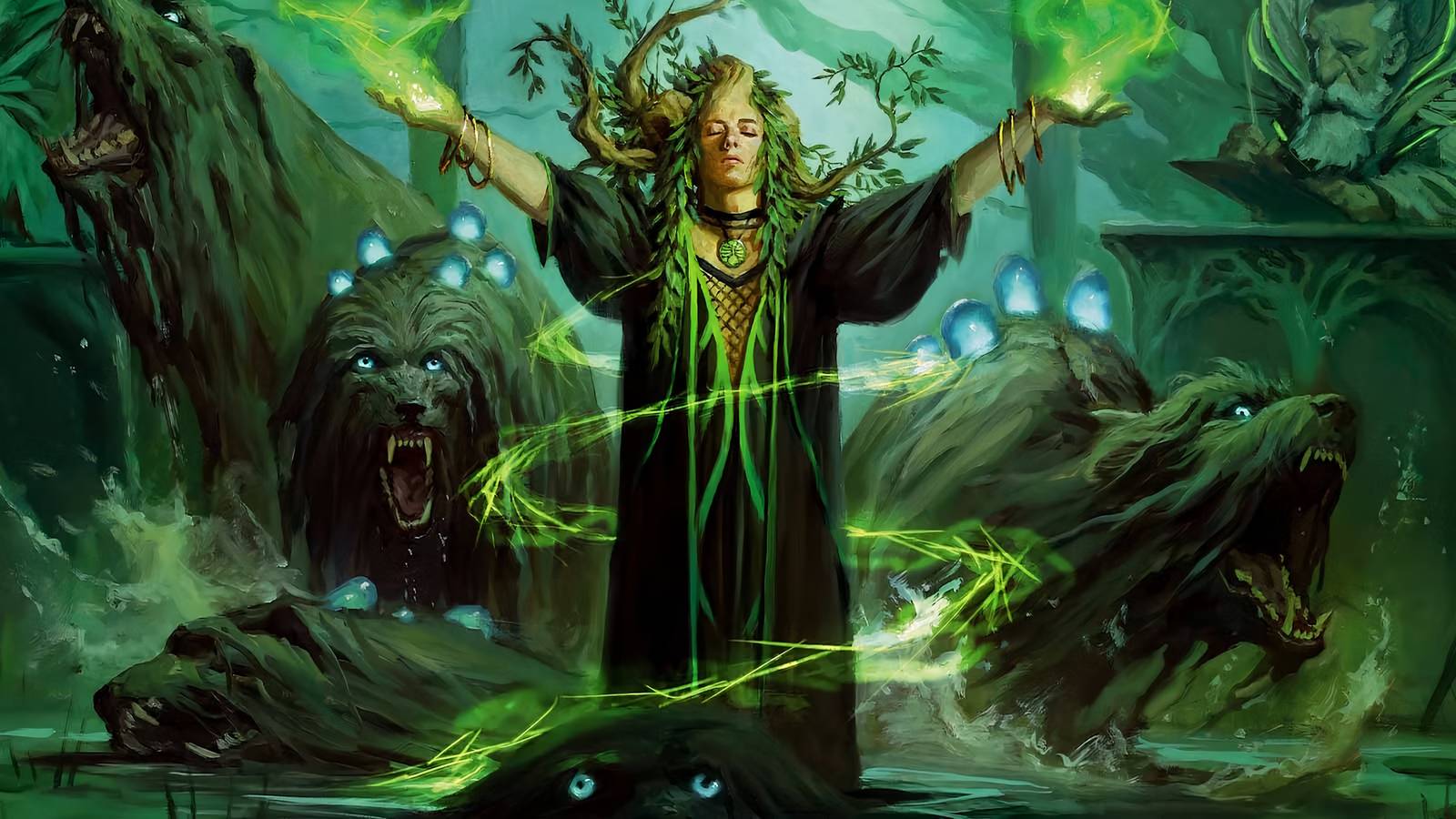
Magic: The Gathering has released a brand-new update to the game’s rules documents coinciding with the release of the Secrets of Strixhaven expansion. The changes for Magic‘s new set include new keywords, adjustments to old rules, and more clarifications.
Secrets of Strixhaven, the card game’s return to the fan-favorite plane of Arcavios, has been one of the most highly-anticipated releases of 2026. The set boasts a plethora of powerful cards themed around the titular academy of magic, including a new mechanic that lets players cast some of Magic: The Gathering‘s most powerful spells. Secrets of Strixhaven also welcomes the return of the popular Mystical Archive subset from the original Strixhaven: School of Mages set, featuring a variety of iconic cards with stunning new alternate art versions. Now, Magic: The Gathering is tidying up some of its rules and adding new keywords to celebrate Secrets of Strixhaven’s upcoming launch.
Why the Final Fantasy Magic: The Gathering Card “Flash Photography” Has Skyrocketed in Price
One previously overlooked Final Fantasy Magic the Gathering collaboration card has recently seen a sudden and unexpected jump in price.
Magic: The Gathering Updates Rules for Secrets of Strixhaven
Wizards of the Coast officially rolled out Magic‘s newest rules update on April 15. Among the biggest changes to the game’s ruleset for the April revision are the litany of new keywords added to Magic: The Gathering, including Increment, Paradigm, and Prepared. Increment causes creatures to gain +1/+1 counters when its controller casts a spell with greater mana value than either the creature’s power or toughness. The Paradigm keyword lets a player exile an Instant or Sorcery after its initial cast, then allowing the player to cast a free copy during each of their turns. Prepared is arguably the biggest new keyword in the set, allowing players to cast a specific Instant or Sorcery spell by meeting conditions specified in a creature’s ability text.
Beyond Secrets of Strixhaven’s new keywords, the set welcomed numerous changes to the more complex rules of the game. Cards that give effects based on the X cost of a spell on the stack will now properly register the value of X when modified by cards like Unbound Flourishing. Magic: The Gathering‘s Saga cards saw a particularly notable change to their functionality, entering with lore counters as an intrinsic ability and being affected by cards like Doubling Season and Blood Moon. Secrets of Strixhaven also brought three new card subtypes: Book Artifacts, Dellian Planeswalkers, and Giraffe Creatures.

As with many past rules updates, Wizards of the Coast updated the Oracle text for several older cards as well. Multiple Artifact cards were updated to include the Book Artifact type, including staples like The Book of Exalted Deeds, Tamiyo’s Journal, and Venser’s Journal, among others. Some new cards in Secrets of Strixhaven, like Choreographed Sparks and Slumbering Trudge, received small wording changes to better reflect the intended effect of each card.

Find all 10 pairs
Find all 10 pairs
Regular Cover ArtClean Cover Art
Secrets of Strixhaven looks to be one of the hottest sets of the year, with plenty more in store for the Wizards of the Coast card game. Magic: The Gathering has four more sets planned for release throughout 2026, including new crossovers with Marvel Super Heroes, The Hobbit, and Star Trek. The TCG will also debut one more in-universe set later in the year, with the mysterious Reality Fracture scheduled for release in early October. 2026 should be an exciting year for Magic: The Gathering, as Wizards of the Coast continues to push the boundaries of the game.
Magic: the Gathering April 2026 Rules Update
This is a summary of the rules changes planned to come to Magic with the release of Secrets of Strixhaven. The official rules can be found on our rules page. If there should be a discrepancy between this summary and the official rules, the official rules take precedence.
New Rules
For detailed descriptions of each of the new mechanics, check out Matt Tabak’s excellent mechanics article.
702.191
This rule and its subrules define the increment keyword ability. As we would have said in my coding classes back in the day, rule++.
702.192
More definitions! This time, we’re defining the paradigm keyword ability.
722
Preparation cards: What are they? How do they work? This isn’t a pop quiz, but if it was, you’d find the answers in this rule.
Other Rules Changes
107.3e
We’ve updated the wording of this rule to clarify that cards that reference the value of X for a spell on the stack, like Brass Infiniscope, will see the modified value of X in cases where it’s changed by effects like that of Unbound Flourishing.
118.7e
Reducing costs of spells or abilities by referencing a particular mana symbol can be complex in cases involving hybrid symbols. We’ve updated this rule to make it clear that reducing a cost by a hybrid symbol that involves {C} (, for example), can reduce a cost by {C} rather than just one generic mana.
205.3g, j, and m
We’ve added the Book artifact type, the Dellian planeswalker type, and the Giraffe creature type to our lists of subtypes.
207.2c
Infusion, opus, and repartee are the newest additions to the list of ability words.
508.4a
This rule defines what happens when a creature is put onto the battlefield attacking a player, planeswalker, or battle that is no longer around to be attacked (or isn’t a planeswalker or battle anymore). These wording updates clarify that it applies to creatures that enter via ninjutsu or sneak.
603.10a
The list of zone-change triggers that look back in time has been clarified to specifically include abilities that trigger when a player sacrifices a permanent. While this was previously included under the umbrella term of “leaves-the-battlefield abilities,” we believe it is helpful to be more specific in this case.
701.17d
This rule handles situations where a spell or ability asks for information about a milled card but more than one card was milled due to an effect like that of Bruvac the Grandiloquent. We expanded this rule to apply to effects that give permission to cast or play the milled card so that the permission will apply to each of the milled cards.
702.155b, 714.3a, and 714.3b
We’ve made a small change to how Sagas work. The mechanism that adds lore counters to Sagas now better matches planeswalkers and battles. Specifically, we’ve made the ability that causes Sagas to enter with lore counters on them an intrinsic ability. We did the same for the ability that allows the controller of Sagas with read ahead to choose a number of lore counters. This makes some interactions more intuitive: Doubling Season will now double the number of lore counters a Saga enters with. Urza’s Saga will now enter with zero lore counters instead of one while Blood Moon is on the battlefield.
702.190a
Sneak needed a small wording tweak to better define the cast permission it provides. Saying nothing about this would have been more in the spirit of sneak, but it turns out I’m not that sneaky.
Oracle Updates
We’ve been hitting the Biblioplex all semester to prepare for this update, and we’ve got a few you’ll find interesting. We’ll leave minor templating adjustments and reminder text out of this discussion. For the rest of the Oracle updates, I’ve put together a nice study guide.
Required Reading
We introduced the new Book artifact type on Diary of Dreams in this release, so it only makes sense that we’d add the Book artifact type to some older cards as well. If you’re looking to catalog these changes yourself, you won’t need to learn the Dewey Decimal System. I’ll just give you a list!
- Arcane Encyclopedia
- Autograph Book
- Barrin’s Codex
- The Book of Exalted Deeds
- Book of Rass
- The Book of Vile Darkness
- Codie, Vociferous Codex
- Emmessi Tome
- Five Hundred Year Diary
- Folio of Fancies
- Fool’s Tome
- Geth’s Grimoire
- Grimoire of the Dead
- Heirloom Epic
- Illuminated Folio
- Investigator’s Journal
- Jalum Tome
- Jayemdae Tome
- Jodah’s Codex
- Kyren Archive
- Mangara’s Tome
- Marina Vendrell’s Grimoire
- Mazemind Tome
- Mercadian Atlas
- Monster Manual
- My First Tome
- Mysterious Tome // Chilling Chronicle (Yes, both faces!)
- Otherworld Atlas
- Phyrexian Grimoire
- River Song’s Diary
- Sarevok’s Tome
- Sarpadian Empires, Vol. VII
- Spellbook
- Summoner’s Grimoire
- Tamiyo’s Journal
- Tamiyo’s Logbook
- Tarrian’s Journal
- Thran Tome
- Tome of Legends
- Tome of the Guildpact
- The Underworld Cookbook
- Urza’s Tome
- Venser’s Journal
- Wizard’s Spellbook
Additionally, a few cards create tokens that need this update, so we’ve updated the rules text on the following cards to make sure those tokens get the Book artifact type.
- Moira Brown, Guide Author
- Tamiyo, Completed Sage
- Volo, Itinerant Scholar
School Dances
Choreographed Sparks’s second mode has an erroneous “next” in its text. We’ve removed that “next” to make the ability granted to the token properly match abilities on cards like Ball Lightning. (The Lorehold professors are quite proud of our historical accuracy.)
Old text:
This spell can’t be copied.
Choose one or both —
• Copy target instant or sorcery spell you control. You may choose new targets for the copy.
• Copy target creature spell you control. The copy gains haste and “At the beginning of the next end step, sacrifice this token.”
New text:
This spell can’t be copied.
Choose one or both —
• Copy target instant or sorcery spell you control. You may choose new targets for the copy.
• Copy target creature spell you control. The copy gains haste and “At the beginning of the end step, sacrifice this token.”
Sleeping in Class
The second sentence of Slumbering Trudge’s replacement effect contains phrasing that does not function properly as part of a replacement effect. We’ve updated Slumbering Trudge’s Oracle text to solve this issue. While the original text doesn’t use the value of X to determine whether Slumbering Trudge should be tapped, this updated text best approximates how most players would understand the printed text in most situations.
Old text:
This creature enters with a number of stun counters on it equal to three minus X. If it entered with a stun counter on it, tap it.
New text:
This creature enters with a number of stun counters on it equal to three minus X. If X is 2 or less, it enters tapped.
Gym BuddiesSpry and Mighty asks you to choose two creatures you control, but sometimes it’ll resolve when you only control one creature. What happens in that case? Well, the answer is confusing and we don’t expect you to know it, but the card now has errata. With the updated wording, if you can’t choose exactly two creatures you control, the spell just won’t do anything. Remember, you need a spotter when you lift, even if you’re as tall as a Treefolk.
Old text:
Choose two creatures you control. You draw X cards and the chosen creatures get +X/+X and gain trample until end of turn, where X is the difference between the chosen creatures’ powers.
New text:
Choose exactly two creatures you control. You draw X cards and the chosen creatures get +X/+X and gain trample until end of turn, where X is the difference between the chosen creatures’ powers.
Now you, like Emeritus of Ideation, are prepared to cast spells at Strixhaven University. Secrets of Strixhaven releases on April 24, 2026, and is available for preorder now from your local game store, TCGplayer, Amazon, and elsewhere Magic is sold.
PakarPBN
A Private Blog Network (PBN) is a collection of websites that are controlled by a single individual or organization and used primarily to build backlinks to a “money site” in order to influence its ranking in search engines such as Google. The core idea behind a PBN is based on the importance of backlinks in Google’s ranking algorithm. Since Google views backlinks as signals of authority and trust, some website owners attempt to artificially create these signals through a controlled network of sites.
In a typical PBN setup, the owner acquires expired or aged domains that already have existing authority, backlinks, and history. These domains are rebuilt with new content and hosted separately, often using different IP addresses, hosting providers, themes, and ownership details to make them appear unrelated. Within the content published on these sites, links are strategically placed that point to the main website the owner wants to rank higher. By doing this, the owner attempts to pass link equity (also known as “link juice”) from the PBN sites to the target website.
The purpose of a PBN is to give the impression that the target website is naturally earning links from multiple independent sources. If done effectively, this can temporarily improve keyword rankings, increase organic visibility, and drive more traffic from search results.