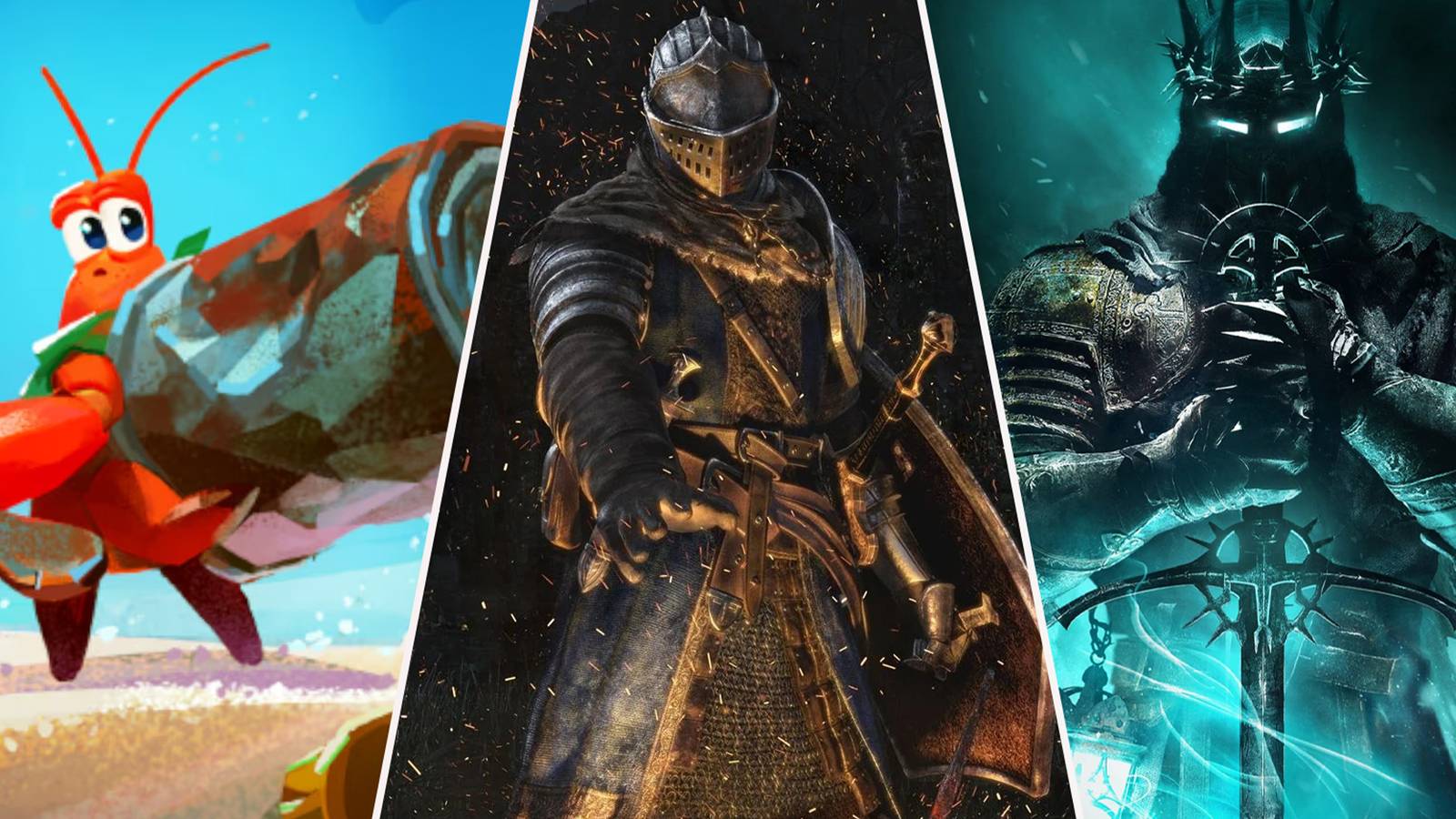
Dark Souls is synonymous with difficult games, to the point that calling something the “Dark Souls of…” has been a meme and cliché for about a decade. While not the originator, Dark Souls put the Soulslike genre on the map and wrote the blueprint as the foundational entry. Consequently, these RPGs tend to have epic boss fights, stamina meters, respawn points, Metroidvania-style map design, medieval-style armor, and a high challenge level. The thing is, these types of releases have become so common that difficulty is not a badge of honor anymore, and plenty of Soulslike games are easier than Dark Souls. That is by design.
There is absolutely nothing wrong with wanting to play something that scratches the same itch as FromSoftware’s masterpiece without being as steep a hill to climb. Let’s look at the greatest Soulslike games that are kind of easy, just by the standards set by the genre. Don’t get me wrong, most of these titles are still quite difficult.
Which Soulslike Is Right for You? Difficulty Breakdown at a Glance
If you’re tired of trying to “Git Gud,” use this table to find your next adventure based on what usually makes you quit these games.
|
Game |
Best For… |
Why It’s Easier |
Difficulty Score (vs. Dark Souls) |
|---|---|---|---|
|
Another Crab’s Treasure |
Absolute Beginners |
Massive “Assist Mode” options (including a literal gun) and a helpful “No damage from falling” toggle. |
2/10 (Adjustable; the vanilla campaign is closer to a 5) |
|
Star Wars Jedi: Survivor |
Story Lovers (And, naturally, Star Wars fans) |
Features 5 distinct difficulty sliders. “Story Mode” makes you feel like an all-powerful Jedi with zero stress. |
3/10 (on Story) |
|
Nioh 3 |
RPG Fans |
The new Open-Field design lets you explore and over-level. The “Ninja” style is pretty OP against normal world enemies, and it does well against bosses. |
6/10 |
|
Steelrising |
Steampunk Fans |
Includes a built-in “Assist Menu” that lets you reduce damage taken and skip the stamina management mechanic. |
3/10 (With Assists); 4.5/10 (Without Assists) |
|
AI Limit |
Anime Fans |
No Stamina Bar, Mostly Fair Bosses |
5/10 |
The 7 Best Soulslike Games On Xbox Game Pass, Ranked
Game Pass doesn’t have Dark Souls or Elden Ring, but it has a few great Soulslike games that can keep you busy for a long time.
Lords Of The Fallen (2023)
Dark Souls, But Easier
Be it the 2014 original or the 2023 reboot, Lords of the Fallen has never been able to escape its “Dark Souls, but not FromSoftware” label, and the similarities are near-impossible to miss. While not as bad as the first game, the 2023 release is still essentially just the FromSoftware formula, albeit with a few twists that just about manage to set LOTF apart from its obvious inspiration. The most interesting mechanic is the dual-realm system, which lets players swap between two dimensions that can have different enemies, and one of them gives you a revive. Although this will hopefully be used to greater effect by the upcoming sequel, the 2.0 version does a pretty good job with it.
Although not painfully easy, LOTF is far and away one of the easiest Soulslikes on the market, especially if we were just to take boss fights into account. Even newcomers to the genre will probably not struggle too much against most of the bosses, and veterans will smash through them like they are in god mode. Don’t get me wrong, the fights can be fun, but they are not consistently challenging. The same can be said for casual enemies found during exploration, but those present a level of difficulty that is more in line with the Soulslike genre.
Nioh 3
The Easiest Nioh Game, And Easier Than Any Dark Souls Game
For the most part, Nioh is a harder franchise than Dark Souls, although they both have the same “issue” in that their campaigns get progressively easier. Team Ninja’s first effort in the series is considerably harder than the original Dark Souls, while the sequel has spikes in difficulty that reach higher peaks than FromSoftware’s release. However, from all 6 games across both IPs, Nioh 3 is the easiest of the bunch. Don’t get me wrong, it is still fairly challenging, but the bar is set lower.
Nioh 3 is (essentially) open-world, featuring four maps set in different eras. All of these are split into sections clearly marked by advised levels, so players will rarely find themselves entering areas they are not equipped to handle, provided they stick to the recommendations. Each map ends with a crucible zone that typically contains the hardest boss fights and is structured more like the first two games’ missions; however, enemies found in the open-world are pretty darn easy. Sure, you will occasionally come across a hidden boss or master that packs something of a punch, but they are rare. Honestly, even the crucible bosses aren’t extremely difficult by Soulslike or Nioh standards, except for a couple of human enemies.
Best PC Settings for Nioh 3 (Optimization Guide)
Nioh 3 has performance issues that may cause the game to lag and drop fps, so here are some best pc settings to help you optimize the game.
What makes Nioh 3 easier than Dark Souls is the sheer volume of options presented to players. You always have access to two loadouts that complement each other, with one prioritizing power and the other speed. Guardian Spirit Skills are relatively strong, and you will be able to use them almost constantly by the end of the game. Living Artifact transformations take longer to materialize, but it’s like you gain access to a Stand from JoJo. Burst Break is relatively easy to trigger, giving you a few easy hits on enemies and bosses.
Full disclosure: I played Nioh 2 somewhat recently, so I imagine that familiarity played a part in shaping my experience with Nioh 3. I imagine if you have not touched any entry in this series, you might struggle a bit more with the 2026 release.
Demon’s Souls (2020)
The Boss Fights Are Way Easier Than Dark Souls
Starting with a unique case, 2009’s Demon’s Souls put Soulslikes on the map, setting the stage for the bigger and more successful Dark Souls. FromSoftware’s original game was refreshingly difficult, forcing players to work their way through five worlds that are split into intense and (at times) convoluted stages.
A strong argument could be made that Demon’s Souls has the hardest paths to boss fights in any Souls game, especially since each stage has only one bonfire. Death is punished severely and can result in substantial time being lost. That said, Demon’s Souls‘ boss fights are easy, with most of them having obvious gimmicks that can be exploited. The campaign has two challenging compulsory bosses: Maneater and Flamelurker. Even then, they would be just mid-tier fights in Dark Souls.
In this case, the remake is taking center stage. The original game’s novelty enhanced its difficulty as there was nothing similar in 2009. By 2020, Soulslikes had become so common that most people had years of experiences when they dived into Bluepoint’s Demon’s Souls. Crucially, a lot of its tricks and popular tips were already known, and the remake even includes a ring that reduces the difficulty of one of the hardest areas (Swamp of Sorrow).
New players who have never touched a Soulslike might find Demon’s Souls to be even harder than Dark Souls, or at least roughly around the same level. Experience with the genre plays a big role here.
AI Limit
An Anime Soulslike That Packs A Punch But Is Not Too Difficult
Released on the same day as The First Berserker: Khazan, AI Limit was completely overshadowed by Neople’s game, which is closer to hack and slash than a Soulslike (and is very difficult). In comparison, AI Limit is far more reminiscent of Dark Souls, albeit with enough twists to be its own thing. For one, the game drops the Stamina bar entirely, letting you smack enemies down as much as you want. Somewhat as a replacement, AI Limit uses a Sync Rate that makes the protagonist stronger or weaker depending on the percentage. This system rewards aggression, while still expecting players to be mindful of enemy attacks.
I should say, AI Limit isn’t absurdly easy by any stretch of the imagination, and normal enemies can be even more challenging than bosses, with some of their attacks being fairly hard to read for parries. However, the difficulty never goes above “moderate” for a Soulslike, and it doesn’t punish mistakes too harshly. If you die, you only lose a portion of your Crystals, which reduces the threat of failure.
Star Wars Jedi: Fallen Order & Star Wars Jedi: Survivor
They Somehow Managed To Successfully Make the Star Wars Setting Fit into a Soulslike Gameplay Loop
-
Star Wars Jedi: Fallen Order Star Wars Jedi: Survivor Platform(s) Xbox Series S, Xbox Series X, PS5, PS4, PC, Stadia, Xbox One PlayStation 5, Xbox Series S, Xbox Series X, PC Released 2019-11-15 2023-04-28 Developer(s) Respawn Entertainment Respawn Entertainment Publisher(s) Electronic Arts Electronic Arts OpenCritic Page https://opencritic.com/game/7407/star-wars-jedi-fallen-order https://opencritic.com/game/14199/star-wars-jedi-survivor
In many ways, Star Wars Jedi: Fallen Order’s implementation of Soulslike mechanics was a testament to how far the genre had come. One of gaming’s biggest publishers, Electronic Arts, entrusted the gameplay style to one of their major Star Wars releases.
Fallen Order gave fans a much-wanted modern single-player Star Wars game that lets them play as a Jedi. Along with the Soulslike mechanics, the game also introduced aspects of 3D Metroidvania. The latter themes are well implemented, but they disappointed some players who would have rather explored more planets than backtrack to previous areas.
Thankfully, the sequel game Star Wars Jedi: Survivor improved upon a lot of these complaints and was a true successor, in that it was basically better than the original in every way. However, neither game is as difficult as Dark Souls, despite all the polish, interesting boss fights, and unique mechanics. Due to focusing way more on traversal and platforming than Dark Souls, Jedi: Survivor‘s campaign is generally quite breezy, even if battles require players to concentrate and utilize all the mechanics rather than just hack and slash their way through everything. That said, a lot of the fodder enemies are very easy, as they should be considering Cal’s Jedi status. Still, the campaign has a few pretty difficult bosses.
Stranger of Paradise: Final Fantasy Origin
A Soulslite Power Fantasy With That Special Team Ninja Touch
Considering Ninja Gaiden is known for its backbreaking difficulty, two Team Ninja games appearing on this list feel strange, but the developer’s modern releases have been slightly easier than its classic releases. As a Final Fantasy spin-off, Stranger of Paradise: Final Fantasy Origin was always destined to be more accessible than the average Soulslike, and that is technically the case. At the start of a playthrough, the game offers four difficulty levels: Story Casual, Story, Action, and Hard. The latter is comparable to Dark Souls and Team Ninja’s first two Nioh games, but the former three are considerably easier. Story should be a walk in the park for most genre veterans, while action provides a challenge while still delivering a power fantasy experience.
I am just talking about the campaign, as the post-game introduces Chaos difficulty, which is harder than base Dark Souls.
Although taking enough elements from Soulslikes to warrant a mention, Stranger of Paradise is more of a Soulslite, and it emphasizes its job/class system far more than FromSoftware games. On Action, players don’t need to overprepare and master the RPG elements, but those two elements become important on greater difficulties. Honestly, Stranger of Paradise: Final Fantasy Origin can be recommended to people who either want a game easier or harder than Dark Souls; also, they should ignore its slightly negative reputation, as the combat system is fantastic.
Remnant 2
The Shooter Soulslike With A Well-Balanced Campaign
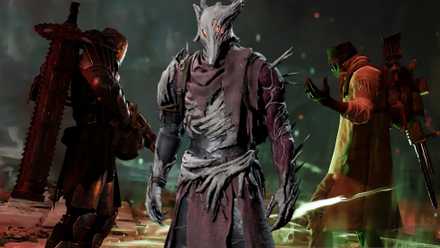
Primarily known as the shooter souls franchise, Gunfire’s Remnant is by no means easy, with both games putting up considerable challenges. Remnant: From the Ashes is arguably harder than Dark Souls, particularly if played solo rather than with a few friends. While still demanding, the sequel is better balanced than its predecessor, with the campaign having fewer notable difficulty spikes.
Remnant 2: 8 Overpowered Builds That Are A Lot Of Fun
Check out these overpowered builds in Remnant 2 that really emphasize the fun of destroying all enemies in your path.
More importantly, Gunfire included a class tailor-made for single-player, one that comes with a built-in dog companion. This decision made Remnant 2 viable for solo runners who would rather ignore the co-op. That said, the game’s third-person shooter gameplay is fairly far removed from Dark Souls‘ melee-driven action, and a player’s mileage will likely come down to which type of combat they prefer. Still, Remnant 2 is a relatively easy Soulslike game, going solely by the very high bar set by the genre.
The Last Hero of Nostalgaia
An Easy Tribute To Dark Souls
Plenty of Soulslike games wear their influences on their sleeves for everyone to see, but The Last Hero of Nostalgaia might just be the most blatant. As suggested by its title, this indie game revels in celebrating gaming’s past, especially FromSoftware’s Souls projects. Throughout the relatively short campaign, players will be constantly bombarded with nods to Dark Souls weapons, bosses, and ideas, creating an experience that is OK on its own but a blast when viewed through the lens of a genre fan.
While not a walk in the park by any stretch of the imagination, The Last Hero of Nostalgaia is one of the easiest Soulslike games of all time, with only a handful of bosses presenting much of a challenge (and they are not plentiful). Honestly, the “hardest” part of the game is the reliance on backtracking, which is more frustrating than actually difficult.
Who’s That Character?

Identify the silhouettes before time runs out.
Identify the silhouettes before time runs out.
Easy (7.5s)Medium (5.0s)Hard (2.5s)Permadeath (2.5s)
Asterigos: Curse of the Stars
Less Punishing That Dark Souls, And Even Has Difficult Settings
More of an action RPG with Soulslike elements than a full entry in the genre, Asterigos: Curse of the Stars shares enough things in common with Dark Souls to warrant a try by anyone craving something similar. Besides having difficulty levels, Asterigos‘ standout difference is its weapon system, which grants Hilda, the protagonist, access to six types at any given moment. Players are encouraged to switch between all weapons as necessary so they can target enemy weaknesses, and they each have unique skill trees.
Although not perfect, Asterigos is a pretty darn good game with solid combat, a fun setting, and enjoyable boss battles. On normal difficulty, the game offers a minor but easily surmountable challenge, especially for people who are intimately familiar with Soulslikes. Certain weapons, like the Staff, are also really overpowered, although that can be said for some of FromSoftware’s projects as well.
PakarPBN
A Private Blog Network (PBN) is a collection of websites that are controlled by a single individual or organization and used primarily to build backlinks to a “money site” in order to influence its ranking in search engines such as Google. The core idea behind a PBN is based on the importance of backlinks in Google’s ranking algorithm. Since Google views backlinks as signals of authority and trust, some website owners attempt to artificially create these signals through a controlled network of sites.
In a typical PBN setup, the owner acquires expired or aged domains that already have existing authority, backlinks, and history. These domains are rebuilt with new content and hosted separately, often using different IP addresses, hosting providers, themes, and ownership details to make them appear unrelated. Within the content published on these sites, links are strategically placed that point to the main website the owner wants to rank higher. By doing this, the owner attempts to pass link equity (also known as “link juice”) from the PBN sites to the target website.
The purpose of a PBN is to give the impression that the target website is naturally earning links from multiple independent sources. If done effectively, this can temporarily improve keyword rankings, increase organic visibility, and drive more traffic from search results.