On Sunday evening, former New York City Mayor Rudy Giuliani was admitted to a hospital in critical but stable condition, according to a statement from his spokesperson Ted Goodman. The 81-year-old had appeared on his online show just two days earlier, coughing and warning his audience his voice was “a little under the weather.” The cause of the hospitalization was not initially disclosed, though a source later told Fox News it was pneumonia.
The news sent a wave through political circles; prayers from President Trump, well-wishes from former NYC Mayor Eric Adams, and a flood of retrospectives covering Giuliani’s storied, turbulent decades in public life. But buried in that history, largely forgotten, is a chapter that belongs just as much to gaming culture as it does to legal history: the time Rudy Giuliani became an unlikely hero for gaming.
A Dictator, a Courtroom, and the Moment Giuliani Became Call of Duty’s Unlikely Hero
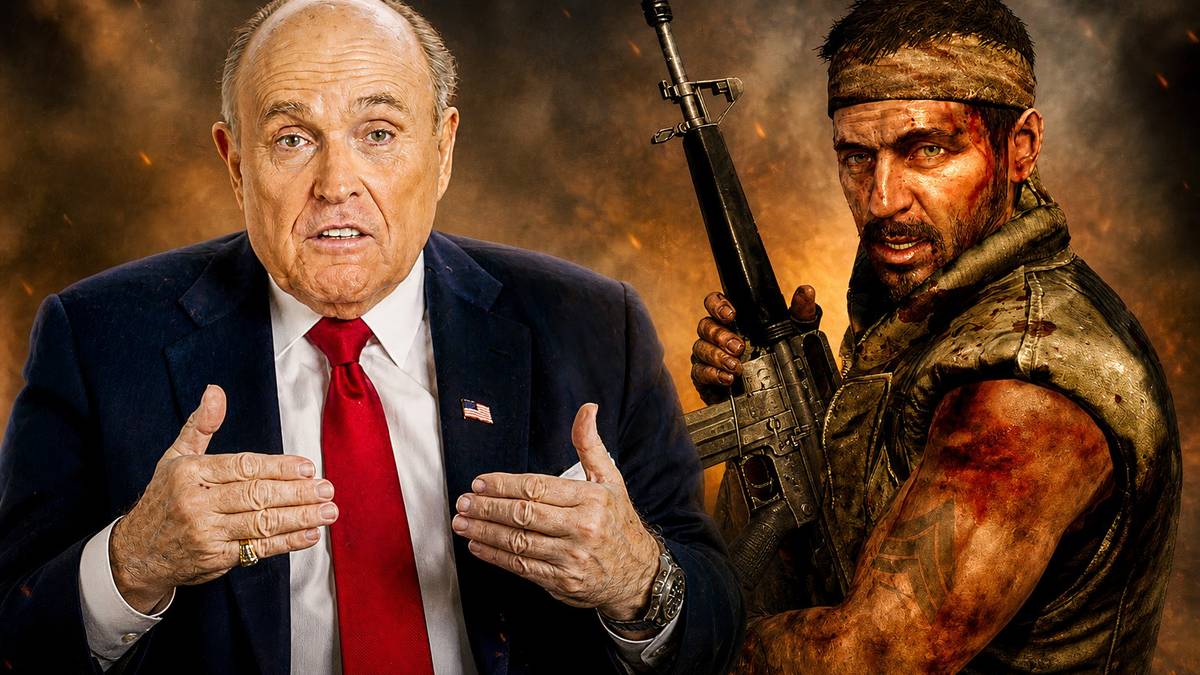
It was 2014, and Activision Blizzard found itself in a fight it didn’t expect. Manuel Noriega, the former Panamanian dictator then serving a 60-year prison sentence for murder, embezzlement, and corruption, had sued the video game giant over his portrayal in Call of Duty: Black Ops II. The 2012 game featured Noriega as a villain character who aids the game’s key antagonist, and Noriega claimed his likeness had been used without consent, arguing the depiction damaged his reputation and lined Activision’s pockets without his permission.
The game had sold over a billion dollars’ worth of copies within 15 days of launch. Noriega wanted a slice of that. Activision needed a heavy hitter.
Enter Rudy Giuliani.
Giuliani joined Activision’s legal team as co-counsel, filing a motion to dismiss the lawsuit and arguing that the game’s portrayal of Noriega was protected free speech under the First Amendment. He was characteristically colorful about it. “What’s astonishing is that Manuel Noriega, a notorious dictator who is in prison for the heinous crimes he committed, is upset about being portrayed as a criminal and enemy of the state in the game Call of Duty,” Giuliani said publicly. “Quite simply, it’s absurd.”
Why It Mattered for the Entire Gaming Industry
The case wasn’t just about one dictator and one game. Activision argued, and Giuliani echoed, that if Noriega’s lawsuit succeeded, it would set a devastating precedent for the entire entertainment industry. Historical figures and their heirs would effectively gain veto power over their portrayal in video games, films, and television. Entire genres of historical fiction could be chilled.
Giuliani pointed out that previous Call of Duty titles had featured figures like President John F. Kennedy and Fidel Castro. The creative and legal stakes extended far beyond Black Ops II. From war games to political simulations to biopics rendered in interactive form, the ability to feature real people, including villains, as characters is fundamental to how games tell stories about the real world.
Giuliani, leveraging his background as a First Amendment attorney who had previously represented major news outlets like the Wall Street Journal, argued this was precisely the kind of case the free speech protections were built for. He even offered a memorable analogy: “Noriega going after Call of Duty, you should think of it as Osama bin Laden’s family going after Zero Dark Thirty.”
The Los Angeles court ultimately sided with Activision, dismissing the case. It was a decisive win for game developers and storytellers, and Giuliani had played a key role in securing it.
The Irony of a Life Lived in Other People’s Stories
There is a certain irony in the arc of Giuliani’s career when viewed through this lens. In 2014, he stood in court arguing that powerful public figures cannot control how history portrays them. The right to depict, to fictionalize, to critique is foundational, he said. No one owns their own story completely.
A decade later, Giuliani himself became one of the most contested figures in American public life. Disbarred in New York and Washington D.C., hit with a $148 million defamation judgment for spreading false claims about Georgia election workers, declared bankrupt and later pardoned by President Trump — his own story became a subject of fierce public debate, retelling, and dispute. The man who defended the right to put Noriega in a video game ended up in a very different kind of narrative than he likely imagined.
Whether you view him as a fallen hero or a cautionary tale, the contradictions are hard to ignore.
Giuliani’s Call of Duty Win Still Shapes How Games Tell Real Stories Today
As the gaming world has grown into a dominant cultural force, the legal battles that shaped what developers can and can’t do matter more than ever. The Noriega v. Activision case is part of that foundation.
Most people covering Giuliani’s hospitalization today won’t mention it. It’s a footnote in a long career full of louder headlines. But for anyone who has ever fought a war through a controller, navigated a campaign modeled on real conflicts, or stepped into the shoes of a character lifted from the pages of history. There’s a small, strange debt owed to the moment Rudy Giuliani stood up in a Los Angeles courtroom and said: this game has the right to exist exactly as it is.
As of Monday morning, Giuliani remains hospitalized. His spokesperson asks for prayers. The rest of us are left parsing a complicated legacy, much like the games he once helped defend.
PakarPBN
A Private Blog Network (PBN) is a collection of websites that are controlled by a single individual or organization and used primarily to build backlinks to a “money site” in order to influence its ranking in search engines such as Google. The core idea behind a PBN is based on the importance of backlinks in Google’s ranking algorithm. Since Google views backlinks as signals of authority and trust, some website owners attempt to artificially create these signals through a controlled network of sites.
In a typical PBN setup, the owner acquires expired or aged domains that already have existing authority, backlinks, and history. These domains are rebuilt with new content and hosted separately, often using different IP addresses, hosting providers, themes, and ownership details to make them appear unrelated. Within the content published on these sites, links are strategically placed that point to the main website the owner wants to rank higher. By doing this, the owner attempts to pass link equity (also known as “link juice”) from the PBN sites to the target website.
The purpose of a PBN is to give the impression that the target website is naturally earning links from multiple independent sources. If done effectively, this can temporarily improve keyword rankings, increase organic visibility, and drive more traffic from search results.